
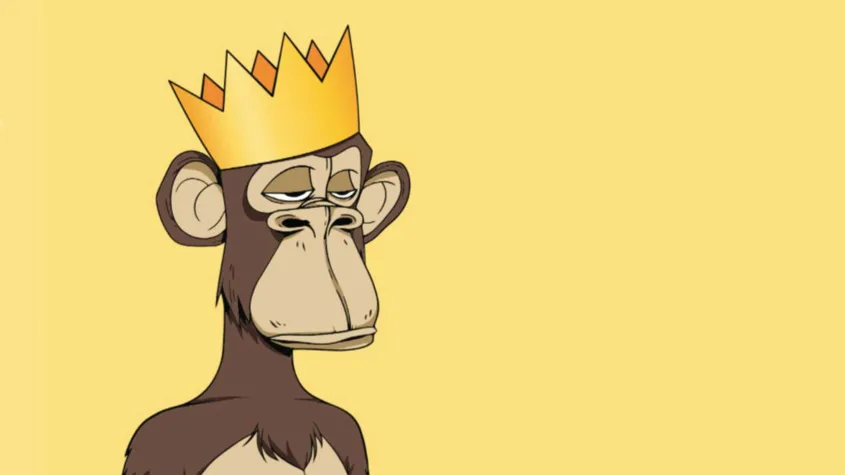
Non-fungible tokens are unique digital properties that use blockchain technology. Our FAQ will help you understand what all the buzz is about.
To many, the concept of an NFT is an enigma. Are they an investment? Collectible? Pricey fad? Scam? The answer: probably all of the above.
Non-fungible tokens take many forms. The most common NFTs to date are two-dimensional digital art, but an NFT can refer to any digital property—an image, video, audio file, even a tweet. Although no one is certain how valuable NFTs will be in the years to come, many experts agree that the market has a lot of potential for growth. From February 2021 to February 2022, the number of active users on OpenSea (registered users who have made at least one NFT transaction) rose from about 15,000 to more than 500,000.
A handful of large companies are expected to enter the market soon, including Niantic (the software-development company responsible for Pokemon Go), Twitter, Meta (formerly Facebook) and Epic Games. “NFTs will become a normal part of our lives,” says Adam Draper, founder of Boost VC, a venture capital firm. They will simply re-create the way we do many everyday things, he says, and allow us to “exchange value, create events, fund art and build community.”
Why do NFTs exist?
NFTs were initially born out of the synthesis of blockchain—the technology behind cryptocurrencies—and digital files. NFTs have value because they create scarcity among otherwise infinitely available digital assets. They have already sparked an evolution of fine art collecting, and the universe of assets both physical and digital being transformed into NFTs is growing rapidly. NFTs have recently been minted to facilitate the authentication of fine liquor—verifying, for example, the authenticity of a $200,000 bottle of single-malt scotch.
Who creates them, and who buys them?
Anyone with access to the technology can create an NFT. After the Russian invasion of Ukraine, an NFT of Ukraine’s flag raised over $6.7 million for the country’s defenses. Paris Hilton recently minted an NFT collage of her and her new husband’s fondest memories. The market has been dominated by buyers with loads of cash. The most expensive known NFT—“Everydays: The First 5,000 Days,” a digital work by American artist Mike Winkelmann (known as Beeple)—sold for $69.3 million in March 2021.
Connor Gu, a tech analyst based in New York City, became interested in NFTs because he thought he might eventually issue NFTs of his late grandfather’s artwork. His grandfather was a prominent painter in China who founded an art academy. A cryptocurrency enthusiast, Gu bought ethereum when the price was low and then purchased his first NFTs in December 2021. “Most NFT projects are risky and will probably go to zero,” says Gu. “But there are a few winners. My strategy is to focus on a couple of collections that I know well.”
How do you buy an NFT?
Most NFTs are traded on online marketplaces designed to serve the market, such as Rarible and OpenSea, but NFTs are becoming available in more-familiar places. For example, the NBA’s Top Shot sells NFT video clips of its star players. And the New York Stock Exchange minted its first set of NFTs in April 2021, commemorating the first trades of six “notable” listings.